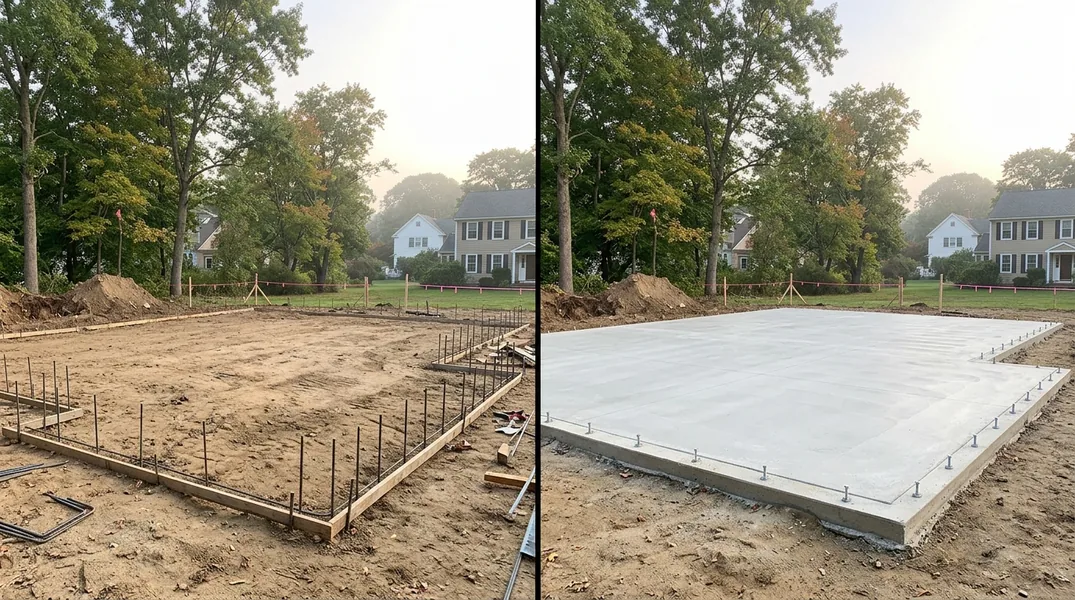
Understanding New Construction Concrete Slabs in New Haven
When you're buying a new home in New Haven, the foundation is literally what everything else rests on. Most new construction homes in Connecticut are built on concrete slabs, which serve as the foundation for the entire structure. A concrete slab is a large, flat expanse of concrete poured directly onto prepared ground, typically four to six inches thick, and it replaces the traditional basement or crawl space in many modern builds.
Understanding how your new construction concrete slab works is crucial before you close on your home. The slab acts as both a structural foundation and a thermal barrier between your home's interior and the ground below. Unlike older homes with basements, slab foundations offer several advantages for new construction: they're faster to build, more cost-effective, and eliminate many moisture issues associated with below-grade spaces. However, they also come with specific maintenance considerations and potential vulnerabilities that every new homeowner should know about.
What to Look for During a Builder Foundation Inspection
Before you sign the final paperwork on your new home, a thorough builder foundation inspection is non-negotiable. This inspection should happen during the final walkthrough and before closing, while you still have leverage with the builder. During this inspection, you're looking for visible cracks, uneven surfaces, and signs of poor drainage around the perimeter of the slab. Small hairline cracks are often normal in new concrete as it cures, but larger cracks, especially those wider than an eighth of an inch or showing signs of movement, warrant concern and should be documented.
Pay close attention to the grading around your home. The ground should slope away from the foundation at a minimum of one inch per foot for at least six feet outward. Poor drainage is one of the most common problems that lead to foundation issues down the road. Check for any standing water, mud, or areas where water pools near the slab. Additionally, inspect the perimeter for proper installation of foundation vents, if applicable, and ensure that any Concrete Driveways or Concrete Patios that have been poured are level and free from significant cracking. Ask your builder for documentation of the soil preparation, any moisture barriers used, and the concrete mix design. These details matter more than you might think when it comes to long-term durability.
New Home Foundation Warranty: What's Actually Covered
Every new home builder in Connecticut is required to provide a warranty on structural elements, including the foundation. However, the specifics of what's covered can vary significantly between builders and warranty programs. Most builder warranties cover structural defects for one to ten years, depending on the builder and the warranty program chosen. It's essential to read your warranty documentation carefully and understand what qualifies as a defect versus normal settling or cosmetic issues.
Typical foundation warranties cover major structural failures, but they often exclude minor cracks, hairline fractures, and settlement that doesn't affect the structural integrity of the home. Some warranties may not cover damage resulting from poor drainage, flooding, or soil movement caused by external factors. Before closing, request a complete copy of your foundation warranty and ask your builder to explain what is and isn't covered. Many builders also offer extended warranties through third-party warranty companies, which can provide additional protection. Understanding these limitations now can save you significant frustration and expense later if issues arise.
Common Concrete Slab Problems in New Haven Homes
New New Haven construction homes can experience several concrete slab issues, particularly if the foundation wasn't properly prepared or maintained during the construction phase. One of the most common problems is concrete settling, which occurs as the soil beneath the slab compacts over time. While minor settling is normal, excessive settling can cause cracks, uneven floors, and doors that no longer close properly. Connecticut's freeze-thaw cycles can also be harsh on concrete slabs, as water that penetrates the surface can freeze and expand, causing spalling and additional cracking over time.
Another frequent issue is efflorescence, a white, powdery substance that appears on concrete surfaces. While efflorescence itself isn't dangerous, it indicates that water is moving through the concrete, which could eventually lead to more serious problems. Staining and discoloration are also common in new slabs, often caused by construction residue or mineral deposits. If you notice these issues developing, Concrete Repair & Resurfacing services can address them before they become structural concerns. The key is catching problems early and addressing them promptly.
Protecting Your Concrete Slab: Maintenance Tips for New Homeowners
Proper maintenance of your new construction concrete slab starts immediately after closing and continues for the life of your home. The most important maintenance task is managing water. Ensure that gutters and downspouts direct water at least four to six feet away from your foundation. Grade should continue to slope away from the home, and any areas where water collects should be addressed immediately. In New Haven's climate, where winter snow and spring thaw are common, this water management becomes even more critical to prevent freeze-thaw damage.
Seal your concrete slab within the first year of construction to protect it from moisture penetration and chemical damage. A quality concrete sealer can significantly extend the life of your foundation and reduce the risk of cracks and efflorescence. Avoid using salt-based ice melts on driveways and patios, as these can damage concrete over time. If you notice cracks appearing, have them evaluated by a professional early. Small cracks can be sealed relatively inexpensively, but ignoring them can allow water infiltration that leads to much costlier repairs. If you're uncertain about the condition of your slab or need professional guidance, contact New Haven Concrete at (475) 234-3917 to discuss your specific situation.
When to Call a Professional: Foundation Concerns Require Expert Eyes
While some concrete maintenance tasks are suitable for homeowners, foundation concerns should always be evaluated by professionals. If you notice significant cracks, persistent water intrusion, uneven floors, or doors and windows that are sticking, these are signs that warrant a professional assessment. A structural engineer or experienced concrete contractor can determine whether issues are cosmetic or structural and recommend appropriate solutions. In some cases, foundation problems can affect your home's resale value and insurability, making early professional evaluation essential.
If you're experiencing foundation issues or want to ensure your new construction slab is in top condition, New Haven Concrete specializes in evaluating and addressing concrete concerns for homeowners throughout the area. Whether you need a second opinion on your builder's foundation, guidance on protecting your slab, or repairs to existing damage, our team can help. Reach out for a free estimate and let us assess your home's concrete foundation. Call us at (475) 234-3917 to schedule your consultation today.
Looking for a professional concrete contractor in New Haven? New Haven Concrete responds fast for all your concrete needs.
Get a Free QuoteOur services: Concrete Driveways · Concrete Patios · Stamped & Decorative Concrete